Peaceful coexistence begins with understanding the skills and dispositions that help people rebuild connection, confidence, and community after displacement.
Understanding what skills and dispositions allow people to live together peacefully is the starting point for creating an enabling environment where such skills can be honed and authentic self-expression can flourish. This is particularly important in contexts of forced displacement where people have fled conflict and are trying to make sense of their lives in exile.
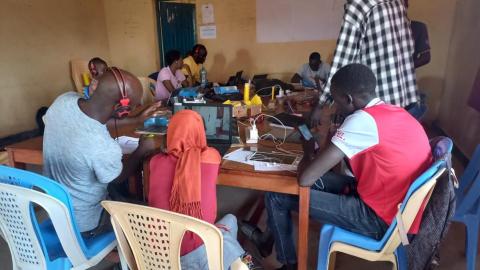
Against this backdrop and during the 9-month course, refugees themselves defined what peace meant for them, and we subsequently identified the social and emotional skills to acquire in a variety of activities that engaged all participants’ physical, cognitive and creative abilities. This allowed everyone to explore their potential across different ways of developing skills conducive to living together peacefully.
At the end of the 9-month course all participants had strengthened skills that supported teamwork, community-oriented initiatives, forms of creative expression, decision-making and self-management, negotiating differences, and expressing solidarity towards others in need. These skills were developed through activities that were authentic, embedded in the contexts in which participants lived, studied and worked, and expressed in ways that were meaningful for all.