Capturing Fluid Borders and Pluriversal Visions of Peace
This project, “Fluid Borders”, brought together researchers, artists and people affected by flooding around Lake Tanganyika to explore how borders and floods shape daily life and education for peace. The team worked with three groups of about ten people in Uvira and Gatumba, using art, drawing and discussion to explore identity, border crossings and safety. The project produced a sensory e‑book, a teaching guide, blog posts and exhibitions to help teachers and communities explore these ideas. You can use the teaching guide to run classroom activities and discuss identity and belonging.
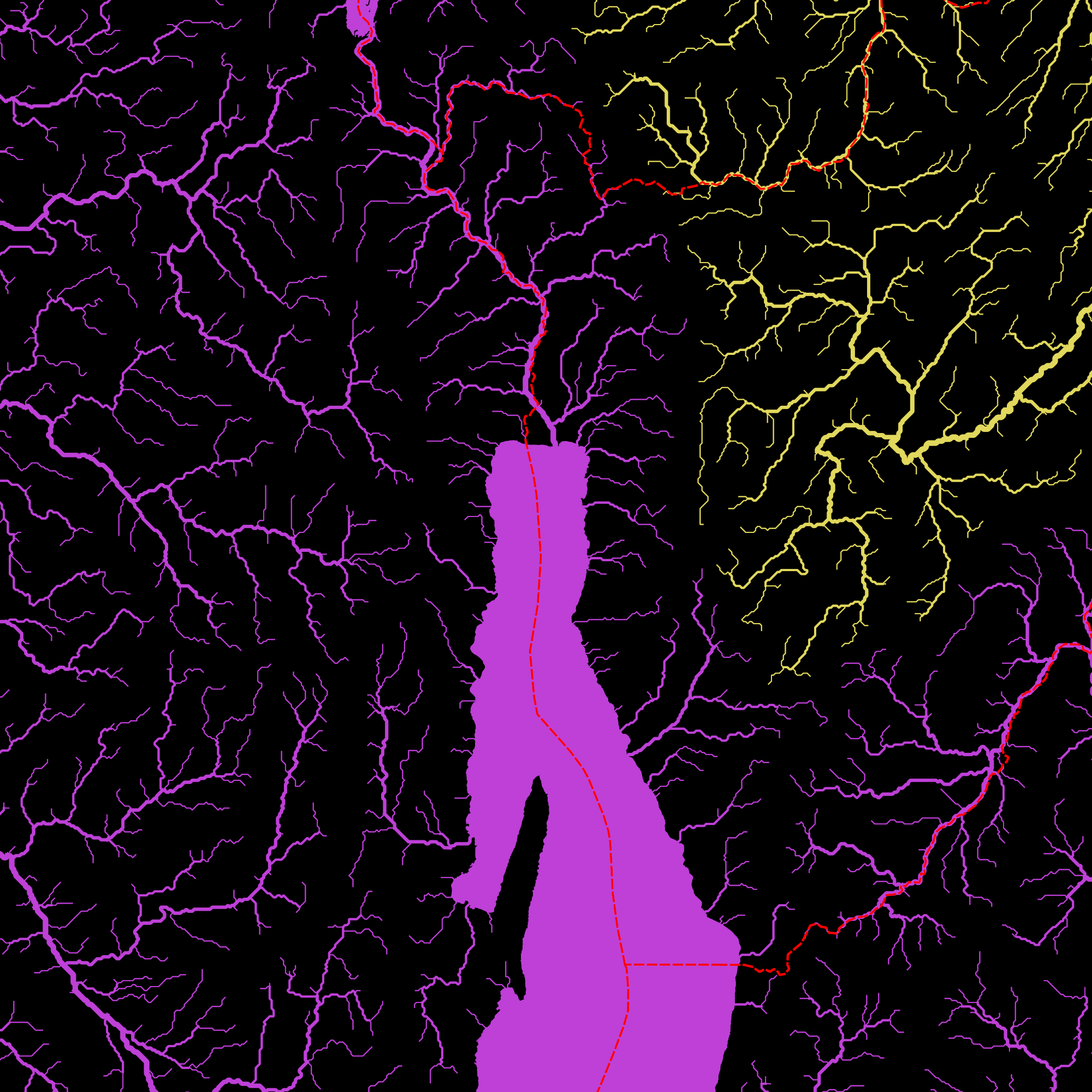
Pluriversal visions of peace within Burundian-Congolese fluid borders
Project Introduction
Fluid Borders is a project undertaken by a team of academic researchers, artists, feminist activists, and people severely affected by flooding around Tanganyika Lake and its riverbeds. We used drawing and conversations to explore how borders — both real and symbolic — affect life and teaching about peace. We look at this from feminist and anti‑colonial viewpoints (that is, how colonial history still affects people).
Rather than seeking to maximise participant numbers, we reflected with three groups of about ten people in Uvira and Gatumba over the whole length of the project. This includes artists, feminist activists, small-scale cross-border women traders, and people severely affected/displaced by flooding living within such fluid borderlands. The Uvira Group led by the Caucus des Femmes also includes civil society and authorities’ representatives; to articulate activist and policy implications of the project with them.
Project Methodology
The project team used creative, arts‑based activities to help people question common ideas about peacebuilding. Together, we created a shared space where participants could reflect on their experiences and use metaphors to talk about change—especially the idea of “fluidity.” This included thinking about identity, borders, rising water levels in Lake Tanganyika, flooding, and how all these shifting conditions connect to insecurity and conflict in the border region. Our goal was to learn from the many different ways people “live and understand the world,” and how they make sense of the links between people, nature, conflict, and peace.
From January 2023 to January 2024, 20 workshops were held across the Uvira–Gatumba border. These sessions explored themes such as border crossings, the idea of many worlds (the pluriverse), Gatumba as a delta, identity at the frontier, border agents, and gender stereotypes in Kirundi proverbs. The first set of drawings and texts from these workshops is available on Flickr. We also worked with university students in Bujumbura and northern Burundi to discuss early findings and connect them to wider debates about the colonial roots of peacebuilding. The project ended with an exhibition of artwork created in the workshops and a public discussion with all participants.
During a week‑long residency, our group—Kioka’s team, two academics, three poets, and a stand‑up comedian—worked together using creative methods. We spent time reading and discussing key writers who explore borders and identity, including Gloria Anzaldúa, Aimé Césaire, Frantz Fanon, and James Baldwin. We used these ideas, along with different forms of art, to rethink the project’s themes. Together, we explored questions about borders, identity, belonging, and exclusion, and we used our own stories to create new texts.
This work led to a mixed collection of writing and art. It includes poetry, slam, and spoken‑word recordings, along with paintings, graphics, and photographs. The collection brings these different voices and styles together in one place. We also produced a pedagogic tool to guide teachers and animators to run activities using the sensorial e-book.
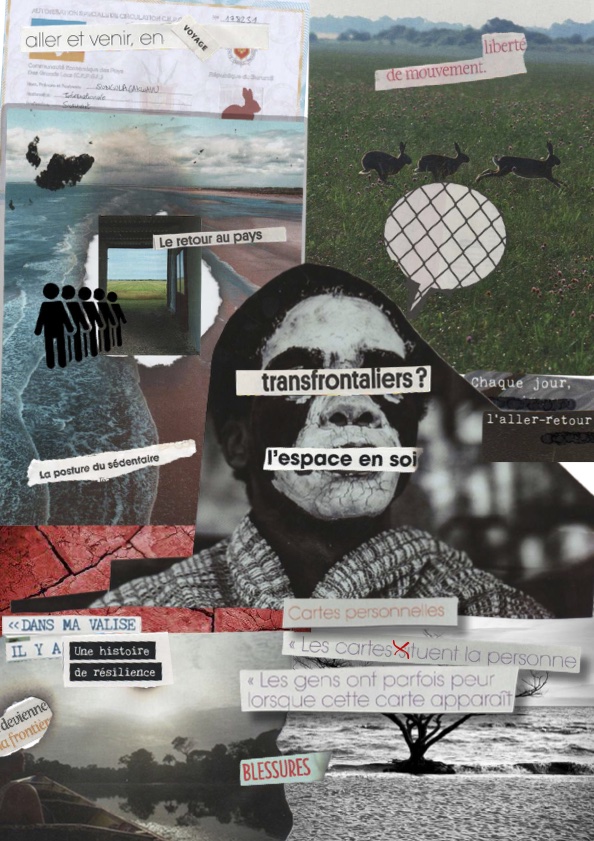
Exploring themes of migration, identity, borders, and resilience
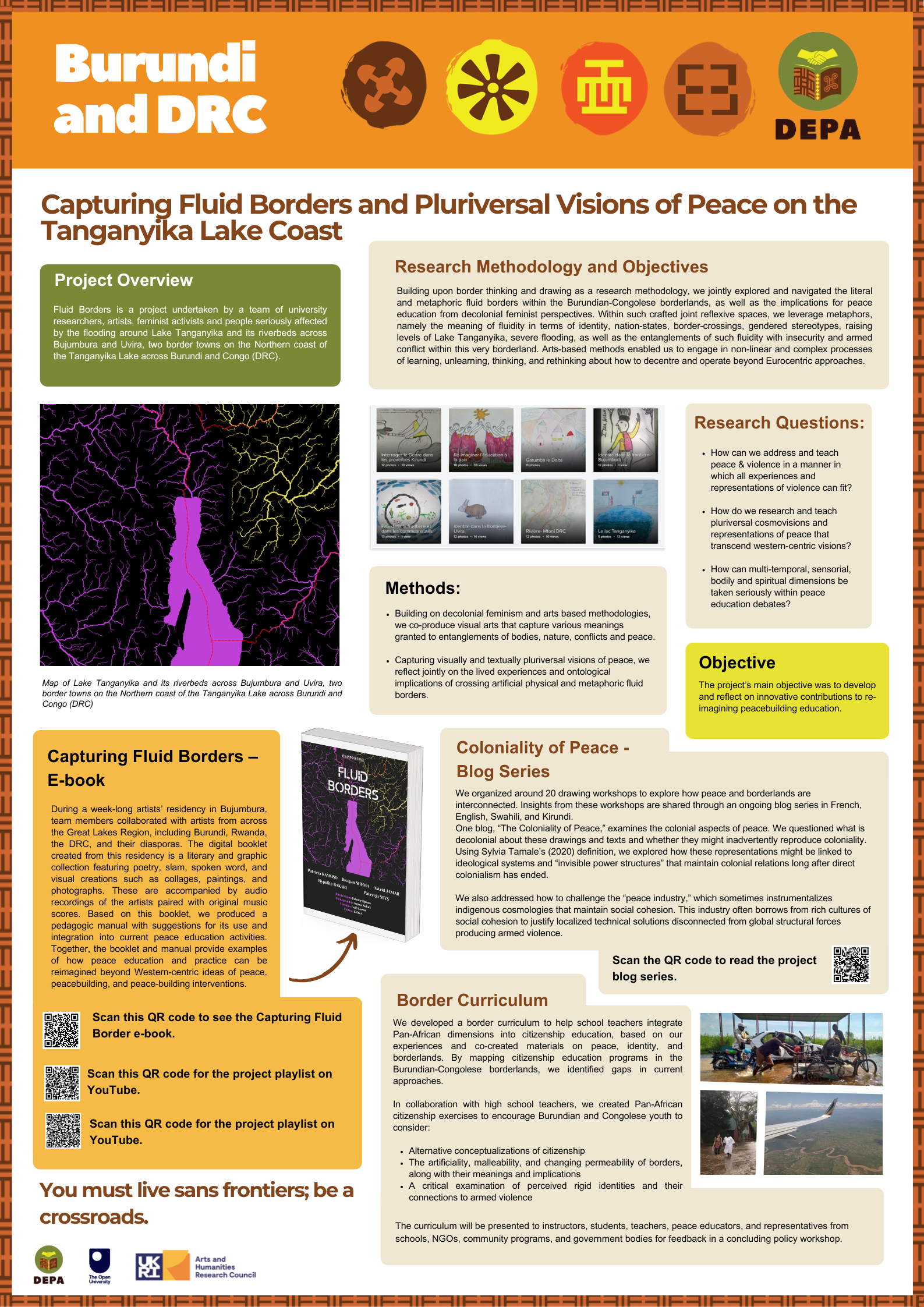
Burundi and DRC Project poster from the DEPA Event
Project Highlights
Many students live and study across (or within) these borderlands in this cross-border context. For example, Burundian universities and schools welcome many Congolese students; displaced children often receive education in the neighbouring country. The fluidity of these lived experiences is often absent from these education programmes. While secondary and university classes are very diverse, school curricula are still structured along national lines and at the national level. Peace issues are also dealt with in community dialogue initiatives and often revolve around mediating interpersonal and inter-group conflicts with groups of young people. These activities take place regularly at the community level. Many are delivered and influenced by approaches provided by international NGOs, marked by Eurocentrism. While identity, perceptions of identity, and experiences of multiple and fluid identities are crucial aspects of conflict, they are rarely explored in existing initiatives. Our artistic work and accompanying scholarly reflection put forward crucial and innovative ways to rethink peace education in the region and on the continent. How can we help young people to read this collection of poems in the light of the artificial construction of borders, an act of violence in itself? How can they develop their own reflections on questions of identity that are so personal, so global and so structural? Our pedagogic work offers a wide option of activities to help students and curious adults explore these questions.
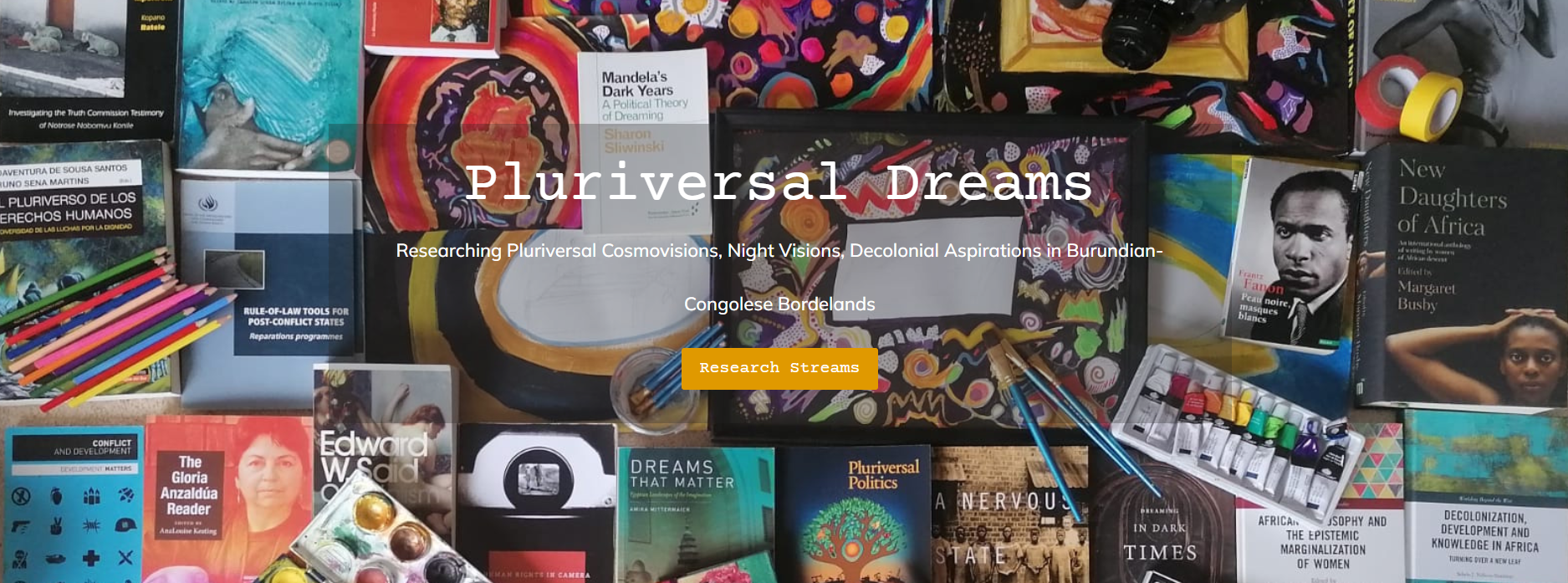
Take a tour of the Fluid Borders Museum
Educational Resources
Educational resources that have been produced through our project include:
Capturing Fluid Borders Pedagogic Guide
The digital booklet is a literary and graphic collection that features poetry, slam, spoken word, and visual creations made of collage, painting, and photography – accompanied by audio recordings of the artists paired with original music scores. Based on this booklet, we produced a pedagogic manual with suggestions of its usage and integration in current peace education activities. Together, the booklet and manual offer examples of how peace education and practice can be rethought beyond Western-centric ideas of peace, peacebuilding, and peace-building interventions. Both the booklet and pedagogic manual are receiving positive attention and feedback from various artistic pedagogic sectors in Belgium and in Burundi.
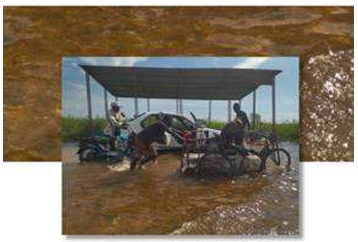
Go to Capturing Fluid Borders Pedagogic Guide
Capturing Fluid Borders Virtual e-Book and Exercises
Capturing Fluid Borders is a multi-disciplinary tool in the form of a literary and graphic collection that lets you listen to recordings of poetry slam, spoken word, combined with paintings, graphics, and photography, with Sidi Cinyanze, Pat Stys, and Joy Slam (Eds).
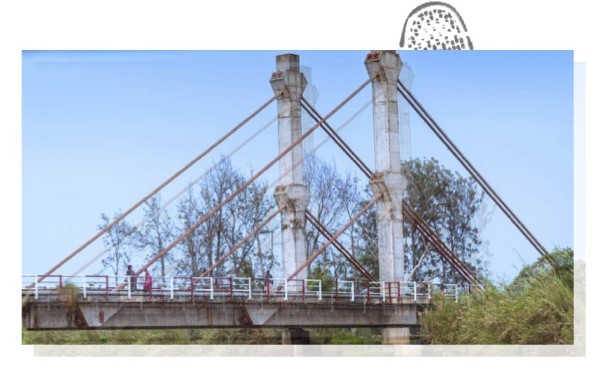
Go to Capturing Fluid Borders e-Book
Go to Pluriversal Dreams Fluid Borders e-Book Exercises
Pluriversal Dreams Border Collection
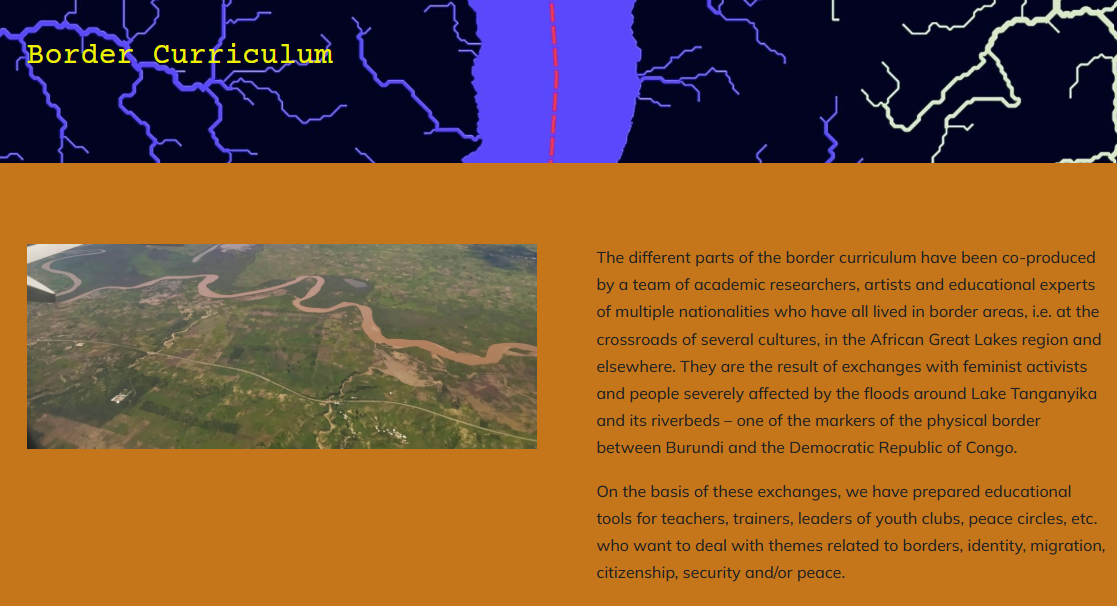
The various parts of the border curriculum have been co-produced by a team of academic researchers, artists and educational experts of many nationalities who have all lived in border areas, i.e. at the crossroads of several cultures, in the African Great Lakes region and elsewhere. They are the fruit of exchanges with feminist activists and people seriously affected by floodings around Lake Tanganyika and its riverbeds - one of the markers of the physical border between Burundi and the Democratic Republic of Congo. The work also benefited from a mapping of existing curriculum in formal education settings in the two countries, as well as an engagement with border pedagogies and pan-African thoughts. On the basis of these exchanges, we have prepared teaching tools for teachers, trainers, youth club leaders, peace circles, etc. who want to deal with themes linked to borders, identity, migration, citizenship, security and/or peace.
Go to Pluriversal Dreams Border-Curriculum
Blog
A multilingual blog series with 18 texts addressing arts based methods, the coloniality of peace, coloniality of the gender, ecofeminism (the pluriverse and borders, frontier identity(ies) and border-crossings, nature). The various blogs have been published in French, English, Swahili and Kirundi.
Virtual Galleries
Curation of 11 online albums documenting the 20 arts-based/drawing and creative writing workshops that explored different dimensions visions of how peace, rivers, gender, and security are entangled in borderlands. These albums share publicly preliminary phases of the project, usually not disseminated. Showcasing the collaborative dimensions of knowledge production, the participants can share them with their own networks. Albums are also useful for anyone seeking to develop participative arts based methodologies. Insights emerging from these workshops were shared through the blog series.

Go to the Pluriversal Dreams Online Galleries
Go to the Fluid Borders YouTube Channel
- Look out for more to come on Decolonial Underpinnings of Translation, Ecofeminism, Arts-based Methods, and The History of the Border.
- Mapping work in progress (and resultant workshops) to tailor further accessible pedagogic tools across the Burundian-Congolese border.
Research Outputs
In addition to the material already listed, other outputs include:
Publications
“Navigating Fluid Borders: Shaking up & Unlearning the Coloniality of Peace Research within Congolese-Burundian Borderlands”, Special Issue “Depopulating places: in search of challenging but possible futures,” Parvati Raghuram (Ed.) Authors: Astrid Jamar, Christelle Balegamire, Pat Stys, and Jean-Paul Nizigiyimana.
“Drawing on/about Proverbial Art to Rethink the Coloniality of Gender across Burundian-Congolese Borderlands,” with J.-L. Nsengiyumva, and J.-P. Nizigiyimana, Chapter for edited book Arts and Heritage in Education for Peace: Insights from Africa, “Melis Cin, Craig Walker, and Faith Mkwananzi (Eds), Open Access book, 2025.
Reports
Activity Report 1: KIOKA on arts-based workshops and border crossing
Activity Report 2: August Dissemination Workshop
Feedback sessions with participants: insights from these can be found in the blog content
Burundi Country Report
Led by the Institute of Development Policy (IOB) at the University of Antwerp the Burundi project contributes to the broader initiative titled Capturing Fluid Borders and Pluriversal Visions of Peace on the Tanganyika Lake Coast, which explores how communities in and around Burundi imagine, negotiate, and sustain peace within complex historical and socio‑political landscapes.
Prepared by Astrid Jamar, this report brings together insights from fieldwork, collaborative engagements, and local knowledge practices. It situates Burundi’s experiences within the wider regional dynamics of the Tanganyika Lake coast, while foregrounding the voices, pedagogies, and peacebuilding strategies emerging from within Burundian communities themselves.
Go to the Burundi Country Report
Exhibitions
Dream Pocket Movies
The pocket movies are emotionally and sensorially powerful. In different ways, they raise awareness around everyday concerns, societal issues such as mourning, trauma, displacement, socio-political realities, and climate crises. Through forthcoming diffusion, the pocket movies can generate a dialogue around humanitarian crises, global warming, and the struggle for survival. More importantly, being embedded in oneiric encounters, they open wide the horizons of the possible, and enable us to rethink, discuss, and articulate radical alternatives that provide for actually sustainable paths.

Activities with the University of Ngozi (Northern Burundi) for International Peace Day
Impact
Even with the challenges we faced, we created a strong and energising space for discussing how peace is shaped by colonial history. We did this with participants and through our academic, artistic, and activist networks in Belgium, Burundi, and South Kivu in the DRC. It’s a project that got us to rethink how we work and approach peace activism and peace education. We are all encouraging our colleagues to appreciate the eurocentrism, power asymmetries, and extractivism of peacebuilding. We also set an example of how to work at a slower pace to mitigate the too often dismissed effects of the coloniality of peace and co-produce locally relevant arts and pedagogic material.